
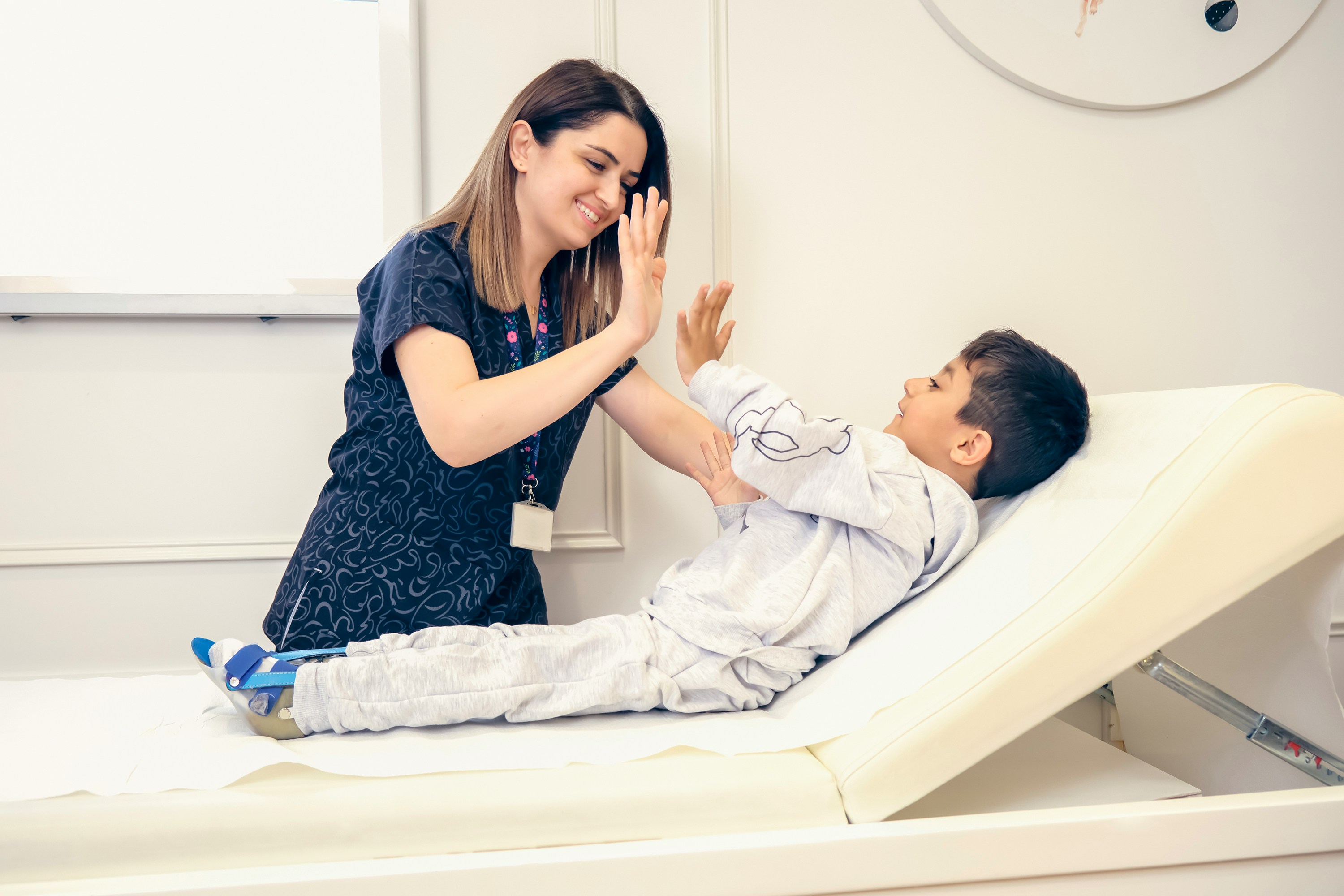
Cerebral palsy is the most common motor disability in childhood, yet many families only have a partial understanding of what the condition means for daily life–and how much difference the right support can make. At Flex Health, we are proud to be Yorkshire’s leading provider of physiotherapy and occupational health services, and we work with children and adults living with cerebral palsy to build treatment plans that improve mobility, protect long-term joint health and support their independence.
In this article, we discuss what cerebral palsy is, how it affects the body, and why cerebral palsy physiotherapy plays such a central role in treatment – from diagnosis in early childhood through to adulthood.
What Is Cerebral Palsy?
Cerebral palsy (CP) describes a lifelong condition affecting movement and posture, arising when the developing central nervous system is injured or does not form typically – whether that happens during pregnancy, labour, or in the earliest days and months after birth. No two cases are the same: the effects depend on precisely which part of the brain was involved and how significant that injury was, which is why symptoms can range from mild to profound.
CP is not a progressive disease – the brain injury itself does not worsen over time. However, without appropriate management, secondary complications such as muscle stiffness, joint problems, and pain can develop as a child grows, which is why early, consistent physiotherapy matters so much.
Causes of cerebral palsy include premature birth, a lack of oxygen during pregnancy or birth (asphyxia), infections during pregnancy, and brain injuries in early infancy. In the UK, cerebral palsy occurs in around one in every 400 children, and research continues to improve our understanding of both its causes and the treatments that help manage it.
Types of Cerebral Palsy
CP is generally classified according to the movement pattern it produces:
- Spastic Cerebral Palsy – the most common form, accounting for the majority of diagnoses, causing increased muscle tone, stiffness and jerky movements.
- Dyskinetic Cerebral Palsy – involuntary, writhing movements that can affect speech, breathing and posture.
- Ataxic Cerebral Palsy – affecting balance and coordination, making walking and fine movement more difficult.
Cerebral palsy is also described according to the areas of the body affected–some people experience symptoms in one limb or one side of the body, while others have symptoms affecting all four limbs. This variation in severity is exactly why every physiotherapy programme at Flex Health is built around individual assessment rather than a one-size-fits-all approach.
How Physiotherapy Helps with Cerebral Palsy
Physiotherapy for cerebral palsy is widely recognised as one of the most beneficial ways to manage symptoms, delivering benefits that improve quality of life. Rather than treating the underlying brain injury – which physical therapy cannot reverse – cerebral palsy physiotherapy focuses on the muscles, joints and movement patterns affected by it, improving a person’s ability to move, function and take part in daily life.
Managing Muscle Tone and Stiffness
One of the defining features of spastic cerebral palsy is increased muscle tone, which leads to stiffness and restricted movement. A physiotherapist uses targeted stretching, positioning, and hands-on techniques to reduce muscle stiffness, maintain joint range, and prevent the muscle contractures that can develop when tight muscles are left unmanaged over time. These approaches form an important part of cerebral palsy physiotherapy, particularly where stiffness affects everyday movement.
Improving Muscle Control, Movement and Balance
Cerebral palsy affects the signals sent from the brain to the muscles, which can make coordinated movement and balance difficult, particularly in ataxic CP. Physiotherapy exercises are designed to improve muscle control and movement, helping the body build stronger, more efficient patterns – supporting patients from crawling and walking in early childhood to safe, confident mobility in adulthood, and reducing the risk of falls along the way.
Preventing Secondary Complications
Left unmanaged, cerebral palsy can lead to secondary complications including joint problems, muscle contractures, hip displacement and chronic pain – among the most serious of the disabilities that can develop over time. Regular physiotherapy plays a preventative role, supporting the reduction of muscle stiffness and helping maintain joint range and overall function, which is a key aim of cerebral palsy physiotherapy.
Physiotherapy for Cerebral Palsy in Children
Early intervention gives children with cerebral palsy the best possible foundation. Ideally, physiotherapy begins as soon as a diagnosis is confirmed, often within the first year of life, when the developing brain and body are most responsive to therapeutic input.
For children, physiotherapy supports key stages of physical development – from head control and sitting through to crawling, standing and walking. Sessions are typically play-based, encouraging active participation while building strength, coordination and functional movement. Our children’s physiotherapy team works closely with families to build a home exercise routine that reinforces progress made in clinic.
Our experienced physiotherapists work alongside occupational therapy and speech and language therapy specialists as part of a wider multidisciplinary team, since cerebral palsy can affect several areas of a child’s development beyond movement alone. Occupational therapy in particular helps children manage everyday tasks such as dressing, feeding and school-based activities.
Physiotherapy for Adults with Cerebral Palsy
Cerebral palsy does not disappear in adulthood, and the needs of adults with cerebral palsy can sometimes be overlooked once paediatric services end. Muscle stiffness, pain, and reduced mobility can all continue to cause difficulties, and without ongoing physiotherapy, function can gradually decline.
Physiotherapy for adults with cerebral palsy focuses on maintaining mobility, managing pain and preserving independence. This might include a structured exercise programme to maintain strength and joint range, gait retraining, and hands-on treatment to ease muscle stiffness built up over years. Our neurological physiotherapy team has specific expertise in treating adults with lifelong neurological conditions, tailoring every programme to the individual’s goals – whether that is continuing to work, staying active with family, or maintaining day-to-day independence at home. This tailored approach is central to effective cerebral palsy physiotherapy for adults.
What Does a Physiotherapy Session Involve?
Every physiotherapy programme at Flex Health begins with a thorough assessment of muscle tone, joint range, strength, balance, and functional movement, alongside a discussion of the goals that matter most to you or your child – whether that relates to walking, school or sport participation, or simply feeling more comfortable in daily life.
From there, treatment plans may include:
- Stretching and manual therapy to reduce muscle stiffness and maintain joint range
- Strengthening exercises to build muscle control and functional movement
- Balance and coordination training
- Gait training to improve walking pattern and mobility
- Advice on positioning, seating, and equipment
- Guidance for families and carers on exercises to continue as part of a daily routine
Physiotherapy is sometimes combined with other treatment, including medicine to manage spasticity, but the exercises and hands-on techniques used remain central to helping people improve movement and maintain function. Our physiotherapists will also provide advice on managing the condition as part of a sensible daily routine.
Is There a Cure for Cerebral Palsy?
There is currently no cure for cerebral palsy. What physiotherapy and the wider treatment team can offer is a way to maximise function, reduce discomfort, and prevent avoidable complications – helping people with cerebral palsy achieve as much independence and participation in daily life as possible.
How Flex Health Can Help
At Flex Health, our physiotherapists have experience assessing and treating children and adults living with cerebral palsy and other neurological conditions. No two presentations of CP are the same, and every treatment plan reflects the individual’s symptoms, goals and stage of life.
While we are a private physiotherapy service, we work alongside NHS teams, GPs, and consultants, and welcome both self-referrals and referrals from other healthcare professionals. You can find further self-help information on our cerebral palsy support page, including practical guidance for families and carers.
Our services are available from our clinics in Hull, Sheffield, Beverley and Willerby, and through home visits where appropriate, making expert physiotherapy accessible across Yorkshire.
Contact Us Today
Book and appointment online or contact us today to discuss an assessment and find out how our physiotherapy team can support you or your family in managing cerebral palsy.