
Whether you play football on a Sunday morning, train for your next half marathon, or turn out for your local rugby club, injury is one of the few certainties of an active life. Sport England’s Active Lives data shows that around 30 million adults in England are now taking part in sport or physical activity every week. With participation at this level, it’s little wonder that sports injury physiotherapy has become one of the most in-demand treatments at clinics across the country, including here at Flex Health, Yorkshire’s leading provider of physiotherapy and occupational health services.
In this article, we look at some of the most common sports injuries affecting active individuals and athletes of all levels, and explain how sports rehabilitation and sports injury physiotherapy can help patients recovering from injury get back to the activity they love – safely, with confidence, and with the root cause properly addressed rather than just the symptoms..
Common Sports Injuries We See
No two patients are the same, but certain injuries appear time and again in our sports injury clinics. Understanding what causes them is often the first step in effective treatment.
1. Knee and Joint Injuries
Knee and joint injuries are among the most frequent presentations, ranging from ligament sprains to more serious ACL, MCL and PCL tears. Football is a significant contributor here: research from the British Orthopaedic Association shows that football injuries account for nearly half of all ACL reconstructions carried out in the UK, with female players facing a three-to-six-times higher risk than their male counterparts. Encouragingly, the same evidence shows that structured injury prevention programmes can cut the risk of ACL injury by half in all athletes, and by two-thirds in female athletes – a clear case for prevention alongside treatment.
2. Hamstring Strains
Hamstring strains are another of the most common sports injuries, particularly in sports involving sprinting and rapid changes of direction. A recent systematic review and meta-analysis of more than 5,950 injuries across seven million hours of match exposure confirmed hamstring strains as one of the most frequent muscle injuries in field-based team sports, with a notably high rate of recurrence when rehabilitation is rushed or incomplete.
3. Ankle Sprains, Calf and Groin Strains
Ankle sprains, calf and groin strains are also regularly seen, especially among footballers and rugby players. The RFU’s own injury surveillance data consistently records lower-limb muscle and joint injuries as amongst the most common match injuries in English rugby, underlining why sport specific injuries call for a treatment plan built around the specific demands of the sport in question.
4. Shin Splints
Shin splints are one of the most common sports injuries among runners, caused by repetitive stress along the shin bone and surrounding muscles, and are frequently linked to sudden increases in training load or unsuitable footwear.
5. Shoulder and Elbow Injuries
Shoulder and elbow injuries, including rotator cuff strains and tennis or golfer’s elbow, are common in racket sports, swimming and throwing sports, while neck pain often affects athletes in contact sports such as rugby, as well as cyclists and those spending long hours in poor postural positions.
How Physiotherapy Can Help
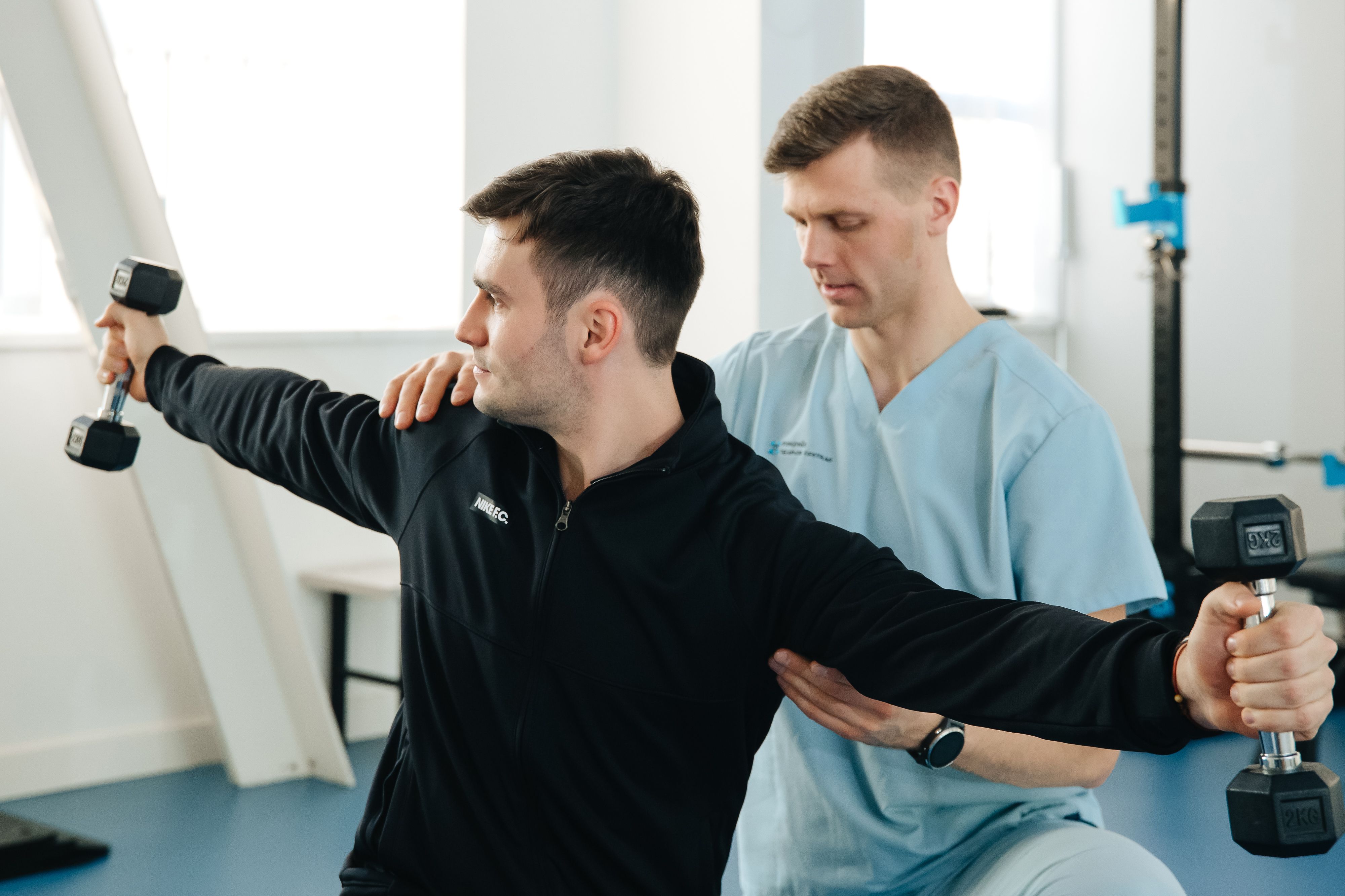
Whatever the injury, effective treatment starts with a thorough assessment. At your first appointment, our chartered physiotherapists at Flex Health will assess your movement, strength and symptoms, take a full history of how the injury occurred, and identify the root cause of the problem – not simply where the pain is felt. This matters because pain is often the last symptom to appear and the first to disappear, meaning many patients who stop treatment as soon as symptoms ease can find the injury recurs.
From there, our team designs a personalised treatment plan, drawing on a range of sports physiotherapy treatments and evidence based treatment approaches, including:
- Manual Therapy: to relieve pain, improve joint mobility and reduce muscle tension.
- Rehabilitation Exercises: tailored to restore movement, rebuild strength and retrain the muscles supporting the affected joint.
- Sports Massage: used both for injury recovery and as part of an ongoing injury prevention routine for active individuals.
- Education and Expert Guidance: on load management, technique and lifestyle factors that may have contributed to the injury.
Exercises are always prescribed with the individual in mind, taking into account the sport, the stage of recovery, and any wider lifestyle factors that might affect healing. Progress is reviewed regularly, with the treatment plan adjusted as strength, movement and confidence improve, so that patients are never doing too much, too soon.
This combination of hands-on treatment and active rehabilitation is well supported by evidence, and reflects the Chartered Society of Physiotherapy’s own musculoskeletal service standards, which emphasise individualised, outcomes-focused care delivered by qualified professionals.
Our approach is built around providing high quality care from the very first visit, rather than a one-size-fits-all programme handed to every patient regardless of their injury or goals.
Post-Operative Rehabilitation and More Complex Injuries
Not every sports injury resolves with conservative treatment alone. For patients who have undergone surgery – whether ligament reconstruction, cartilage repair or joint surgery – post operative rehabilitation is essential to restore movement, rebuild strength safely, and reduce the risk of re-injury. Our sports physios and sports therapists work closely with surgeons and other healthcare professionals to ensure a smooth transition from surgery through to full rehabilitation and safe return to sport, adjusting each stage of the programme as the patient’s recovery progresses.
Injury Prevention Matters Just as Much as Treatment
While treating sports injuries is central to what we do, prevention is just as important. Our highly skilled team of sports physiotherapists also work with athletes and sports clubs on injury prevention strategies, including strength and conditioning advice, movement screening, and guidance on safely increasing training load. As the ACL research above demonstrates, a well-designed prevention programme can meaningfully reduce injury risk – helping athletes stay on the pitch, track or court rather than in the treatment room.
Why Choose Flex Health
At Flex Health, we draw on decades of experience working with professional football, rugby and tennis clubs, and that expertise now supports patients of all levels across our clinics in Hull, Sheffield, Beverley and Willerby, as well as through home visits. Our experienced team of chartered physiotherapists, sports physios and sports therapists provides high quality, expert care to patients recovering from the full range of musculoskeletal conditions and sporting injuries – from a twisted ankle picked up in five-a-side football to a shoulder injury sustained in rugby, or a knee injury requiring post-surgical support.
We understand that being injured, whatever the sport, can be frustrating and worrying, particularly when it affects your ability to train, compete or simply keep active. Our job is to make the difference between prolonged time out and a confident return to activity – treating the whole body, not just the injury, and giving you the expertise and support needed to resume activity safely and see real improvement, session after session.
Get in Touch Today
If you’ve picked up an injury, are managing ongoing symptoms, or simply want expert guidance on injury prevention before the new season starts, we are here to help.
Contact us today to book an appointment with our sports injury physiotherapy team, and take the first step towards recovery, improved movement and long-term joint and muscle health.