
Shockwave Therapy
At Flex Health, we provide Shockwave Therapy as part of our wider Physiotherapy and Injury Rehabilitation Services, helping patients recover from persistent tendon pain, soft tissue injuries and chronic musculoskeletal conditions.
About
Also known as Extracorporeal Shock Wave Therapy (ESWT), shockwave treatment is a non-invasive procedure that uses high energy sound waves to stimulate the body’s healing process, improve blood circulation and support tissue repair.
Shockwave Therapy is commonly used when conservative treatments such as rest, exercise therapy, physical therapy, or anti inflammatory medication have not provided lasting relief.
Delivered by our experienced physiotherapists, our ESWT treatment is tailored to the individual and designed to reduce pain, restore movement and support long-term recovery.
What Is Shockwave Therapy?
Shockwave Therapy is a clinically recognised treatment used to manage chronic pain and soft tissue conditions.
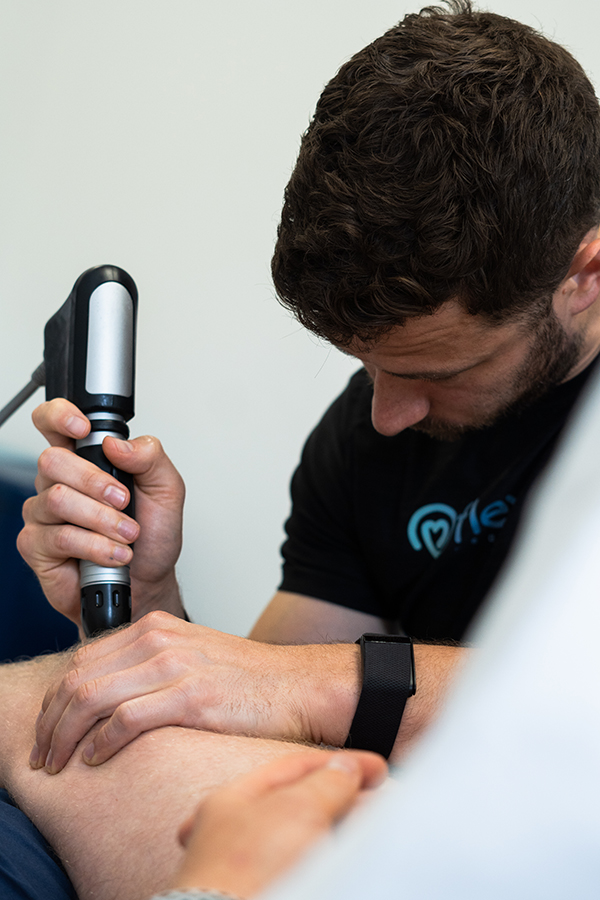
The treatment uses pressure waves delivered through a handheld device to the affected area. These high energy sound waves stimulate cell regeneration, increase blood circulation, and encourage the body’s natural healing response.
Unlike surgery or invasive procedures, Shockwave Therapy is non-invasive and does not require anaesthetic or significant recovery time.
At Flex Health, Shockwave Therapy is used as part of a wider Physiotherapy and Injury Rehabilitation programme, supporting patients with chronic tendon conditions, soft tissue injuries, and persistent musculoskeletal pain through targeted, evidence-based treatment.
How Does Shockwave Therapy Work?
During treatment, a special device delivers controlled pressure waves directly into the treated area. These sound waves create a biological response within the tissue, supporting:
- Increasing blood circulation
- Cell regeneration and tissue healing
- Reduction in chronic inflammation
- Stimulation of the body’s healing process
- Desensitisation of nerve endings to reduce pain
This process can help restart healing in tendons and soft tissue structures that have become slow to recover or chronically painful.
Shockwave Therapy is particularly effective in long-standing tendon conditions where healing has stalled.
What Conditions Can Shockwave Therapy Treat?
Shockwave treatment is commonly used for a range of chronic musculoskeletal conditions and soft tissue injuries.
At Flex Health, it may be recommended for:
- Plantar fasciitis
- Achilles tendinopathy
- Tennis elbow (lateral epicondylitis)
- Patellar tendinopathy
- Chronic soft tissue injuries
- Persistent tendon pain
Shockwave Therapy is widely used within sports physiotherapy and rehabilitation settings to support recovery where symptoms have persisted despite other forms of treatment.
When Is Shockwave Therapy Recommended?
Shockwave Therapy is often considered when conservative treatments have not successfully resolved symptoms.
This may include patients who have already tried:
- Exercise rehabilitation
- Anti inflammatory medication
- Rest and activity modification
- Therapeutic ultrasound
- Previous physical therapy approaches
At Flex Health, every patient undergoes a detailed assessment to determine whether Shockwave Therapy is the right treatment option.
What Happens During a Shockwave Therapy Treatment Session?
Shockwave Therapy sessions are straightforward and relatively quick.
Before Treatment
Your physiotherapist will carry out an assessment to:
- Confirm diagnosis
- Assess the affected area
- Review previous treatment history
- Identify any contraindications or risk factors
This helps ensure Shockwave Therapy is appropriate and safe.
During Treatment
During the procedure:
- Gel is applied to the treatment area
- A handheld device delivers pressure waves into the tissue
- Treatment is focused on the painful or injured area
Most treatment sessions last approximately 10–20 minutes depending on the condition being treated.
Some patients may experience mild discomfort during the procedure, particularly in sensitive or chronically painful tissue. This is normal and usually settles quickly after treatment.
After Treatment
Following treatment:
- Mild ache or soreness may occur for a few hours
- Patients can usually return to normal activities shortly afterwards
- High-impact activity may need temporary modification depending on the condition treated
Our experienced physiotherapists will provide guidance following each treatment session, including activity advice and any exercises to support recovery.
How Many Shockwave Therapy Sessions Are Needed?
The number of treatment sessions required varies depending on:
- The condition being treated
- Severity and duration of symptoms
- Previous treatment history
- Individual healing response
Many patients require a course of treatment over several weeks, with follow up appointments used to monitor progress and adjust rehabilitation where necessary.
Improvements may develop gradually as the healing process progresses.
Is Shockwave Therapy Effective?
Research supports the effectiveness of Extracorporeal Shock Wave Therapy for several chronic tendon conditions, particularly plantar fasciitis, Achilles tendinopathy, and tennis elbow.
Clinical guidance from organisations including the National Institute for Health and Care Excellence (NICE) recognises it as an established treatment option for specific musculoskeletal conditions.
Shockwave Therapy is increasingly used within sports physiotherapy and rehabilitation because of its ability to:
- Reduce pain
- Improve function
- Support tendon healing
- Delay or avoid the need for surgery in some cases
At Flex Health, Shockwave Therapy is always combined with evidence-based rehabilitation and physiotherapy management to maximise long-term outcomes.
Is Shockwave Therapy Right for Everyone?
Shockwave Therapy is safe for most patients, but there are some situations where treatment may not be appropriate.
It may not be recommended for individuals with:
- Open wounds or skin infections in the treatment area
- Certain circulatory or neurological conditions
- Anti platelet medication that significantly increases bleeding risk
- A cardiac pacemaker in some cases
- Certain tendon rupture risks or previous Achilles tendon rupture concerns
- Pregnancy in specific treatment areas
A detailed assessment is always carried out before treatment to ensure patient safety.
Integrating Shockwave Therapy into Physiotherapy Rehabilitation
At Flex Health, Shockwave Therapy is not used as a standalone treatment. Instead, it forms part of a wider Physiotherapy and Injury Rehabilitation approach tailored to each individual.
Our experienced physiotherapists combine:
- Shockwave treatment
- Exercise rehabilitation
- Hands-on physiotherapy
- Movement retraining
- Strength and loading programmes
This combined approach helps address both symptoms and underlying causes of pain.
Why Choose Flex Health?
At Flex Health, we combine evidence-based physiotherapy, advanced rehabilitation technology, and patient-first care to deliver high-quality Physiotherapy and Injury Rehabilitation programmes across Hull, Sheffield and the surrounding areas.
Our specialist rehabilitation team works closely with every patient to create personalised treatment plans, designed around their symptoms, goals and recovery journey.
Our Shockwave Therapy services include:
- Professional assessment and diagnosis
- Individual treatment planning
- Evidence-based ESWT treatment
- Ongoing rehabilitation support
- Clear guidance throughout recovery
Whether you are managing chronic tendon pain, recovering from sports injuries, or looking for alternatives to surgery, our dedicated physiotherapy team can help identify the right treatment approach for you.
Book Shockwave Therapy with Flex Health
If you are struggling with persistent tendon pain, plantar fasciitis, Achilles tendinopathy, or other chronic musculoskeletal conditions, Shockwave Therapy may help support your recovery.
Contact us today to arrange your first treatment session, or speak with our team about the most suitable treatment options for your recovery.