
FLT Medicals
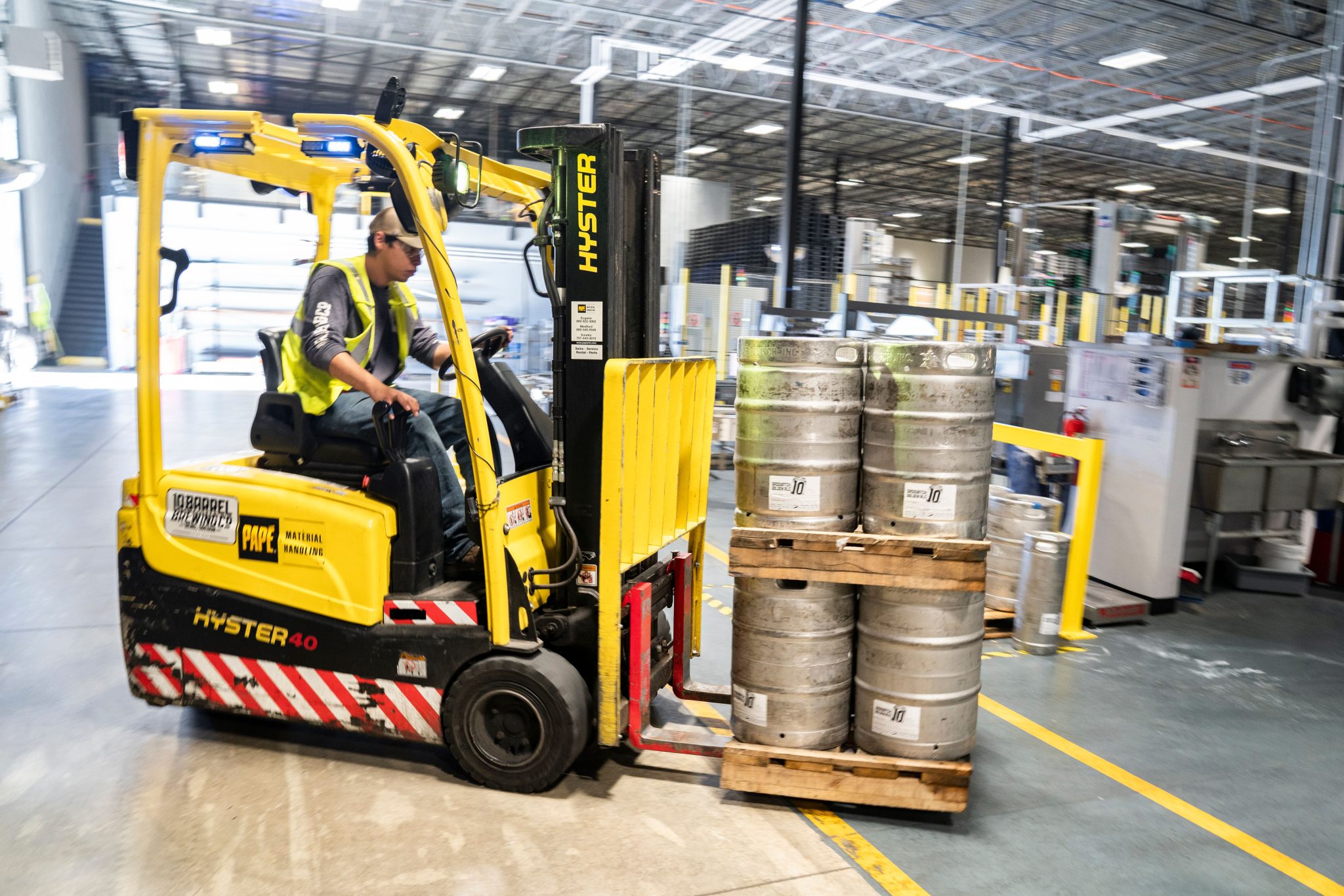
Forklift trucks are essential to warehouses, factories, distribution centres and construction sites across the UK, but they are also among the most hazardous pieces of work equipment in any workplace. According to the Health and Safety Executive, lift trucks are involved in around a quarter of all workplace transport accidents. Making sure every driver is medically fit to operate a forklift safely is one of the most effective ways to control that risk.
As the leading provider of occupational health and physiotherapy in Yorkshire, Flex Health delivers FLT medicals (forklift truck medicals) for businesses of every size, in clinic, on-site or through our mobile units.
What Is an FLT Medical?
An FLT medical is an occupational health assessment that checks whether an employee is physically and mentally fit to safely operate a forklift truck or other powered industrial machinery. Operating a forklift is a safety critical role. A lapse in concentration, a hazard missed in the operator’s peripheral vision or a sudden loss of consciousness can cause a serious accident.
A forklift truck medical looks at the person’s fitness for the driving task itself, taking into account their medical history, medication, vision, hearing, blood pressure and overall health, alongside the demands of their working environment. Employers receive clear advice on whether the individual is medically fit to carry out their duties safely, and whether any restrictions are needed.
Are FLT Medicals a Legal Requirement?
No law states that every forklift operator must have a medical. However, employers have a clear legal requirement under the Health and Safety at Work etc. Act 1974 and the Management of Health and Safety at Work Regulations 1999 to assess and control risk. The Provision and Use of Work Equipment Regulations 1998 (PUWER) also require that anyone who uses work equipment is competent, properly trained and able to use it safely.
The HSE’s Approved Code of Practice, L117 Rider-operated lift trucks, and its guidance for lift truck operators make clear that each person’s fitness to operate a lift truck should be judged individually. In practice, FLT medicals are the most reliable way for companies to show they have met their duties under these work regulations.
What Medical Standards Apply to Forklift Operators?
The Health and Safety Executive does not set its own medical standards for lift truck operators. Instead, HSE guidance refers employers to medical standards equivalent to those the DVLA applies to road drivers, adapted in line with the employer’s own risk assessment:
- Group 1 (car) standard – for most work, a standard equivalent to the DVLA Group 1 entitlement is considered appropriate.
- Group 2 (lorry and bus) standard – where operators work in a particularly demanding environment, for example night work, harsh conditions, or moving highly toxic or explosive materials, a Group 2 standard is likely to be more appropriate.
This risk-based approach means truck medicals should reflect the real demands of the job. Our clinicians work with your management team to agree the right medical standards for each role. Where an employee has a disability, individual assessment ensures they are not unfairly disadvantaged.
What Does a Forklift Medical Involve?
A forklift medical is tailored to the role and typically includes:
- Health Questionnaire and Medical History – a confidential review of past and current medical conditions, medication and any symptoms that could affect an operator’s ability to drive.
- Vision Assessment – testing visual acuity against the relevant DVLA standard (for Group 1, at least 6/12 with both eyes open, with glasses or contact lenses if needed), along with peripheral vision checks, essential for spotting pedestrians and other vehicles.
- Hearing Check – confirming the operator can hear warning signals, alarms and instructions.
- Blood Pressure – uncontrolled high blood pressure can increase the risk of sudden illness at the controls.
- Mobility and Musculoskeletal Assessment – checking the movement and coordination needed to mount the truck, look behind and operate machinery.
- Urinalysis – screening for signs of underlying conditions such as diabetes.
In high risk and safety critical environments, FLT medicals can be combined with our workplace drug and alcohol testing for a robust approach to health and safety.
Medical Conditions That Can Affect Fitness
A range of medical conditions and other factors can affect an employee’s health in ways that influence their ability to control a vehicle safely, including:
- Diabetes, particularly where treated with insulin or medication that carries a risk of hypoglycaemia
- Epilepsy, seizures or unexplained blackouts
- Heart conditions and uncontrolled blood pressure
- Sleep disorders, such as obstructive sleep apnoea
- Reduced visual acuity or peripheral vision
- Mental health conditions, or medication that causes drowsiness
- Musculoskeletal problems affecting the neck, back or limbs
Having a medical condition does not automatically mean someone cannot drive a forklift. Our clinicians assess each individual’s health in the context of their role, advising on adjustments that would allow them to continue their duties safely.
How Often Should FLT Medicals Be Carried Out?
Ideally, every operator should have a forklift medical before they start, as part of our pre-employment and new starter medicals, with regular reviews throughout their employment. Many employers follow an age-based schedule that mirrors DVLA practice, for example, every five years up to the age of 65 and annually thereafter.
An FLT medical should also be repeated after an accident or near miss, following a significant illness or injury, after a change in medication, or whenever there are concerns about an operator’s fitness. Medicals complement, rather than replace, operator training.
Why Choose Flex Health for FLT Medicals?
Organisations across Yorkshire and the UK trust Flex Health with their workforce because we offer:
- Over a decade of occupational health experience, from small employers to multi-site operations.
- Flexible delivery – clinics in Hull, Sheffield, Beverley and Willerby, on-site visits, or mobile units nationwide.
- Clear, practical reporting – a straightforward fitness outcome.
- Confidentiality – medical details stay with our clinical team.
- Joined-up care – from health surveillance and audiometry to occupational physiotherapy, all under one roof.
Whether you need to assess a single new starter or every operator on site, we will help you undertake FLT medicals with minimal disruption to your business.
Frequently Asked Questions
Who needs an FLT medical?
Anyone who drives a forklift or other powered industrial truck as part of their job, including counterbalance, reach, telehandler and pallet stacker operators.
Can someone fail a forklift medical?
An operator may be found temporarily or permanently unfit, or fit with restrictions. Where this happens, we advise on treatment, adjustments and when a reassessment would be appropriate.
Can you carry out FLT medicals on-site?
Yes. We can assess operators at your workplace, reducing time away from their duties.
Get in touch
Flex Health stands out as the regions leading physio & injury rehabilitation provider due to its comprehensive approach to our same-day rapid assessments.
For Physiotherapy and Rehabilitation call: 01482 966 006
For Occupational Health call: 01482 264 040