
Safety Critical Medicals
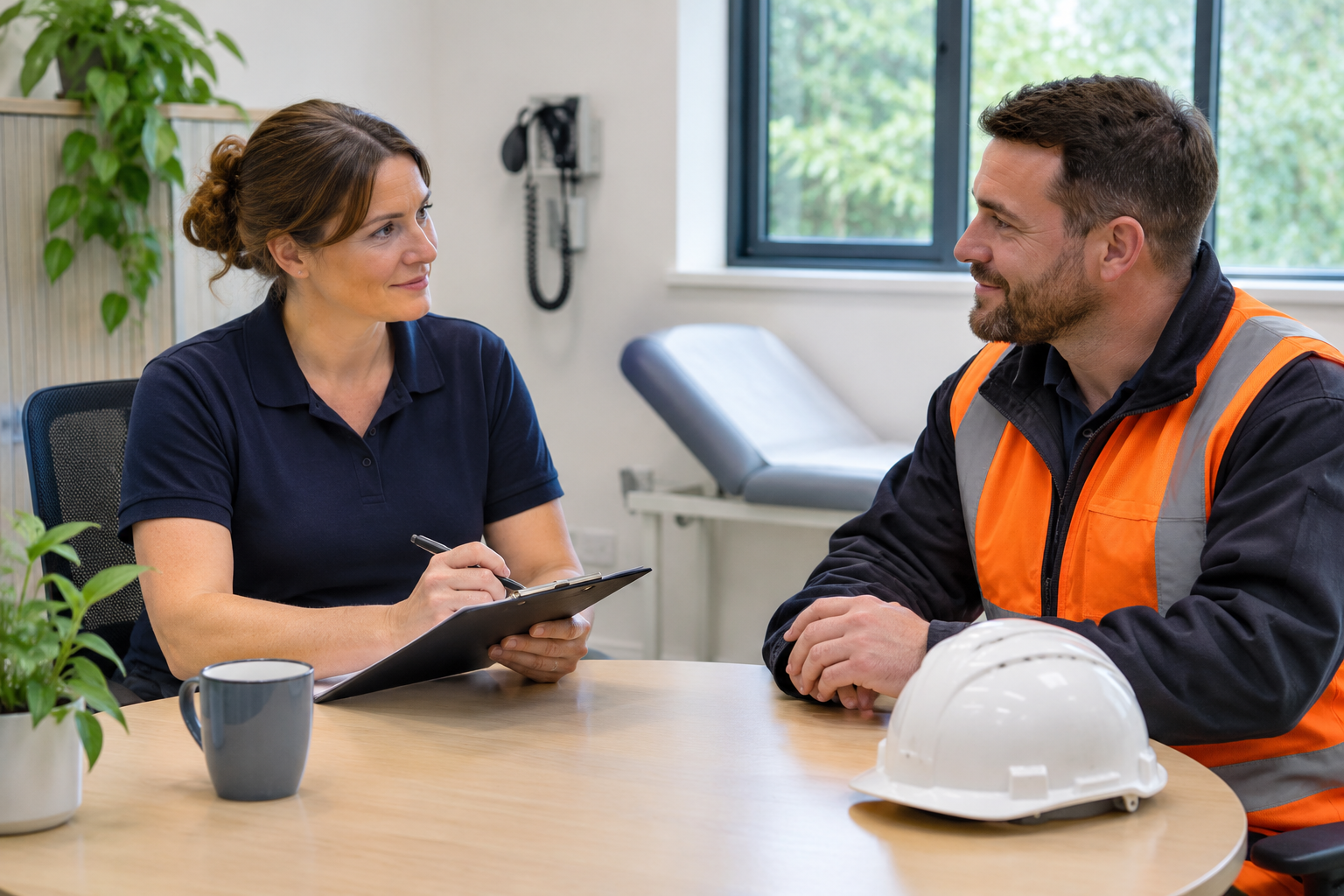
Some jobs leave no margin for error. When an employee is driving a forklift through a busy warehouse, working at height, entering a confined space or controlling the movement of trains, a sudden change in their health can put their own safety, their colleagues and the public at risk. Safety Critical Medicals give UK employers clear, clinical confidence that the people in these roles are medically fit and mentally capable of doing them safely.
At Flex Health, our expert team of occupational health professionals delivers Safety Critical Medicals for businesses across Yorkshire and the UK. We combine robust clinical assessment with practical, people-led support that helps you stay compliant and keep your workforce safe.
What Is a Safety Critical Medical?
A Safety Critical Medical (often shortened to a Critical Medical) is a formal occupational health assessment that checks whether an individual is physically and mentally fit to carry out a high risk job role. It is built around one central question: could a health condition affect this person’s ability to carry out safety critical tasks without endangering themselves or others?
Unlike a general health check, a Safety Critical Medical is a role-specific fitness for work assessment. It looks at the real demands of the job (the machinery, the environment, the shift pattern) and assesses the individual against recognised medical standards for that work. The focus is on medical conditions that could cause a sudden loss of consciousness, impaired judgement, reduced vision or hearing, or slower reactions at the wrong moment, such as epilepsy, poorly controlled diabetes, heart conditions or sleep disorders. The result confirms whether employees can safely perform roles where a lapse could have serious consequences.
Who Needs a Safety Critical Medical?
Safety critical roles are found across a wide range of UK sectors. Common high risk roles include:
- Forklift, plant and crane operators, and anyone operating machinery where a lapse could cause serious harm.
- Rail workers, including track workers, drivers, signallers and those holding Sentinel competencies.
- Professional drivers and workplace transport operators.
- Workers who enter a confined space or work at height.
- Construction, utilities and energy workers on high risk sites.
- Manufacturing, logistics and food production staff in hazardous environments.
- Security, emergency response and on site rescue teams.
Across these high risk industries, medical assessments are typically carried out before someone starts in post, at regular intervals throughout employment, and after significant illness, injury or a change in role.
Health and Safety Legislation and Your Legal Duty
Under the Health and Safety at Work etc. Act 1974 (often called the Health and Safety at Work Act), employers have a legal duty to ensure, so far as is reasonably practicable, the health, safety and welfare of their employees and anyone else affected by their work. The Management of Health and Safety at Work Regulations 1999 build on this, requiring employers to assess risks, provide health surveillance where appropriate, and take employees’ capabilities into account when allocating tasks.
Some sectors have more specific requirements. In rail, regulation 24 of the Railways and Other Guided Transport Systems (Safety) Regulations 2006 (ROGS) requires anyone controlling safety critical work to ensure workers have been assessed as competent and fit, with fitness defined as both physical and mental fitness, and with records available for inspection. Network Rail also sets its own medical fitness standard, NR/L2/OHS/00124, for anyone working on its infrastructure.
For workplace transport, HSE guidance draws on DVLA medical standards. Where operators work in particularly demanding environments, at night or with large, heavy vehicles, some or all of the stricter Group 2 standards may be appropriate, with HSE suggesting screening before employment and at five-yearly intervals from age 45.
Beyond safety legislation, many clients and principal contractors now make valid medical certification a condition of site access. Safety critical medicals are therefore increasingly part of contractual obligations as well as regulatory compliance.
What Does a Safety Critical Medical Involve?
Every assessment is tailored to the role and the relevant national standards, but a Safety Critical Medical will typically include:
- Health Questionnaire: A confidential review of medical history, current medical treatment and medication, lifestyle and mental health.
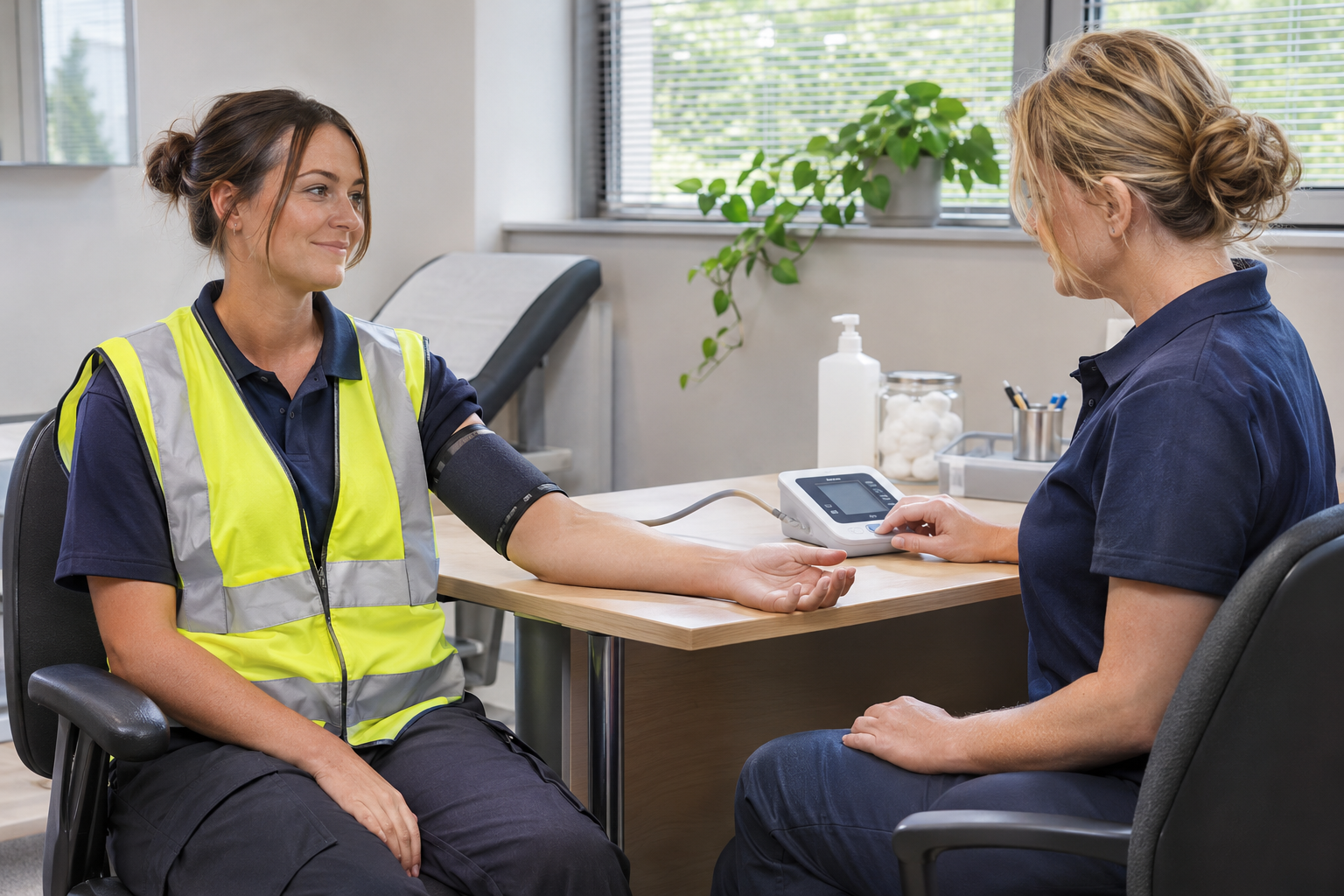
- Blood Pressure and Pulse: To identify cardiovascular health risks.
- Height, Weight and BMI
- Urinalysis: A simple screen for conditions such as diabetes and kidney problems.
- Vision Testing: Visual acuity (near and distance), colour vision and peripheral fields.
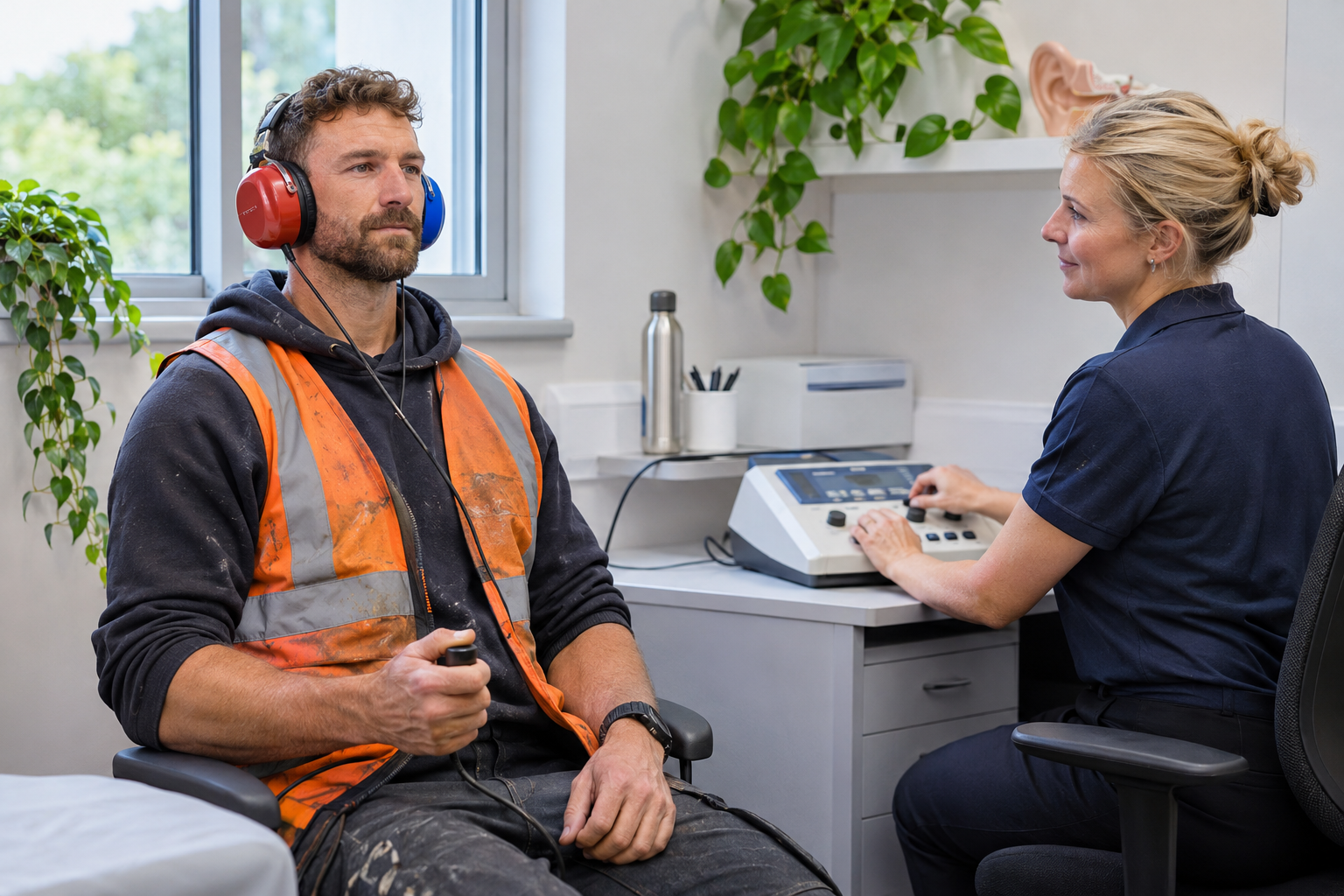
- Hearing Test: Audiometry to check hearing is good enough to detect warnings and communicate safely.
- Lung Function Test: Spirometry where the role involves respiratory exposure or wearing a respirator.
- Musculoskeletal and Mobility Assessment: Checking strength, balance and agility against the physical demands of the role.
- Alertness Screening: Including questions on sleep, fatigue and concentration.
Where the role involves vibrating tools, the medical can be combined with screening for Hand-Arm Vibration Syndrom (HAVS). We can also add Drug and Alcohol Testing, Skin Checks or other additional assessments where your risk assessment or industry standards require them.

Mental Health and Safety Critical Work
Being fit for safety critical work is about more than physical health. Mental health conditions, stress, fatigue and some medications can affect concentration, decision-making and reaction times just as much as a physical condition can. Almost one million workers reported stress, depression or anxiety caused or made worse by their job in 2024/25, making mental health the single biggest driver of work-related ill health, HSE statistics reveal.
Our clinicians approach mental health sensitively and confidentially. The aim is never to penalise someone for seeking help, but to understand whether any health issues affect their ability to work safely, and what support would help.
Our Approach to Safety Critical Medicals
Every organisation, workforce and risk profile is different, so we never take a one-size-fits-all approach. Our process is designed to give you robust, defensible results while making the experience straightforward and respectful for the employees being assessed. From the first conversation to ongoing recall, we work alongside you to build a Safety Critical Medicals programme that fits the way your business operates.
1. Understanding the Role
We start with your risk assessments and job descriptions, so each medical reflects the real safety critical tasks involved and the standards that apply to your sector.
2. Thorough, Consistent Assessment
Trained occupational health professionals carry out each medical against recognised standards, ensuring employees are assessed fairly and consistently, whether they work at one site or many.
3. Clear Outcomes and a Fitness Certificate
After the assessment, you receive a clear outcome (fit, fit with restrictions or adjustments, temporarily unfit, or unfit for the specific role) together with a fitness certificate for your records. Confidential clinical details stay between the employee and our clinicians; you receive the practical information you need to manage safety.
4. Ongoing Monitoring and Recall
We help you set appropriate review intervals and keep track of when each medical is due. This makes maintaining compliance a routine part of your health and safety management rather than a last-minute scramble, and gives you the records to support compliance if you are ever audited.
Flexible On-Site Delivery
We know that taking safety critical staff off the job can cause operational disruption. That’s why our Safety Critical Medicals can be delivered on site through our mobile occupational health units, as well as at our clinics in Hull, Sheffield, Beverley and Willerby. On-site delivery suits shift-based operations, large workforces and multi-site organisations, so you can assess whole teams efficiently with minimal downtime.
Supporting Employers and Employees
Safety Critical Medicals are not designed to exclude people from work. Most people who undergo a Critical Medical are found fit, and for many others, underlying health conditions can be managed safely with the right support.
Where an assessment identifies health concerns, our team will explain the findings, signpost the employee to their GP or a specialist where needed, and advise on reasonable adjustments under the Equality Act 2010, for example where an employee requires temporary restrictions while a condition is treated or stabilised. Spotting issues such as raised blood pressure, declining hearing or reduced lung function early means they can be addressed before they affect job performance, lead to sickness absence or contribute to an incident.
This balanced approach protects both the employee and the business, supporting employee wellbeing while keeping workplace safety at the centre of every decision
Why Safety Critical Medicals Matter
Work-related ill health carries a significant cost. HSE estimates that 1.9 million workers in Great Britain suffered from work-related ill health in 2024/25, and 40.1 million working days were lost to ill health and workplace injury. Injuries and new cases of ill health from current working conditions cost an estimated £22.9 billion in 2023/24.
In safety critical work, the consequences of a single health-related incident can be far greater. A structured programme of Safety Critical Medicals helps you:
- Reduce health risks and the likelihood of serious incidents
- Demonstrate compliance with health and safety legislation and industry standards
- Meet client and contractor requirements for site access
- Identify ill health early and support employees to stay in work
- Protect your people, your reputation and your operations
Why Choose Flex Health?
With over a decade of occupational health experience, Flex Health is the leading provider of Occupational Health and Physiotherapy in Yorkshire. Employers choose us for:
- Experienced occupational health professionals who understand high risk environments
- Role-specific medicals aligned to recognised UK health and safety standards
- On-site delivery that keeps disruption to a minimum
- Fast turnaround and clear, practical reporting
- A people-led approach that puts employee health and dignity first
- Wider Occupational Health Services and Physiotherapy under one roof
Supporting You with Wider Occupational Health Services
Safety Critical Medicals are a key part of a complete Occupational Health Programme. We also provide:
- Health Surveillance
- Audiometry (Hearing) Testing
- Lung Function (Spirometry) Testing
- HAVS Testing
- Workplace Drug and Alcohol Testing
- Pre-Employment Medicals
- Management Referrals
You can view our full list of Occupational Health Services here.
Further Guidance
For further guidance on fitness for safety critical work in the UK, you can refer to:
- HSE: Health and Safety at Work etc. Act 1974
- HSE: Health surveillance
- HSE: Medical standards for workplace transport drivers
- ORR: Safety critical work under ROGS
- GOV.UK: Assessing fitness to drive (DVLA guide for medical professionals)
- GOV.UK: Reasonable adjustments for disabled workers
- HSE: Health and safety statistics
Get in touch
Flex Health stands out as the regions leading physio & injury rehabilitation provider due to its comprehensive approach to our same-day rapid assessments.
For Physiotherapy and Rehabilitation call: 01482 966 006
For Occupational Health call: 01482 264 040