
Parkinson’s disease is a progressive neurological condition that affects movement, balance, coordination, and everyday function. While it is most commonly associated with tremor, Parkinson’s also impacts posture, gait, strength, breathing, and confidence – often long before symptoms become obvious to others.
For people living with Parkinson’s, physiotherapy is not simply an optional add-on to medical care. It is a cornerstone of long-term management, helping individuals remain mobile, independent, and engaged in daily life for as long as possible.
At Flex Health, we specialise in neurological physiotherapy and rehabilitation, supporting people with Parkinson’s disease across Yorkshire and beyond. In this guide, we explore how Parkinson’s disease focused physiotherapy works, what the evidence shows, and how targeted treatment can make a meaningful difference at every stage of the condition.
Understanding Parkinson’s Disease
Parkinson’s disease is a movement disorder caused by the gradual loss of dopamine-producing neurons in the brain. Dopamine plays a vital role in coordinating movement, so as levels decline, motor symptoms begin to appear.
Common Motor Symptoms:
- Tremor
- Slowness of movement (bradykinesia)
- Muscle stiffness
- Changes in posture
- Reduced stride length and step length
- Shuffling gait and freezing
- Balance problems and increased fall risk
Alongside these physical changes, the disease can also affect:
- Breathing and voice projection
- Upper limb function
- Joint flexibility
- Fatigue
- Confidence and emotional wellbeing
Although Parkinson’s disease has no cure, research consistently shows that targeted physiotherapy intervention can slow functional decline, improve mobility, and enhance health-related quality of life.
Why Physiotherapy Is Essential in Parkinson’s Disease Treatment
Parkinson’s disease treatment is most effective when medication and physiotherapy work together. While medication helps manage dopamine deficiency, it does not address the physical changes that develop over time.
This is where Parkinson’s-focused physiotherapy plays a critical role. It focuses on:
- Improving mobility and gait performance
- Reducing Parkinson’s balance problems
- Maintaining muscle strength and posture
- Supporting daily living and independence
- Teaching movement strategies to manage symptoms
- Reducing fall risk factors
At Flex Health, our physiotherapists working in neurological rehabilitation carry out a detailed physical assessment to understand how Parkinson’s is affecting each individual, before building a personalised physiotherapy management plan.
The Science Behind Parkinson’s Physiotherapy
A growing body of research underpins modern Parkinson’s focused physical therapy. For instance, a systematic review and meta-analysis published in the British Medical Journal found that physiotherapy has a positive impact on gait speed, balance, and physical function in Parkinson’s patients. Several randomised controlled trials also show improvements in gait performance, stride length, posture, and mobility with structured exercise programmes, and demonstrate that regular physiotherapy reduces falls and improves confidence compared with usual care.
Research also suggests that Parkinson’s responds particularly well to task-specific, intensive, and cognitively engaging movement – core principles of neurological physiotherapy.
The NICE guideline for Parkinson’s disease recommends that people with Parkinson’s disease have access to physiotherapy throughout the course of the condition.
Key Goals of Parkinson’s Disease Physiotherapy
Physiotherapy for Parkinson’s disease is designed to help people stay mobile, steady, and confident as symptoms progress, supporting independence in daily activities and quality of life.
1. Improving Mobility and Gait
Changes in gait are one of the most challenging aspects of Parkinson’s disease.
Physiotherapy focuses on:
- Increasing gait speed
- Improving step length and stride length
- Reducing freezing episodes
- Enhancing gait symmetry
- Using gait training and treadmill training where appropriate
Tools such as visual feedback, rhythmic cues, and treadmill training help retrain walking patterns and improve confidence.
2. Addressing Parkinson’s Balance Problems
Balance training is essential for reducing falls and maintaining independence.
Physiotherapy interventions include:
- Static and dynamic balance training
- Dual task training (movement + cognitive challenge)
- Weight-shift and postural control exercises
- Tai chi and adapted martial arts-based movements
Evidence from randomised trials shows that exercises such as tai chi significantly improves balance and reduces fall risk in Parkinson’s disease patience.
3. Building Strength and Postural Control
Muscle weakness and stooped posture are common as Parkinson’s progresses.
Physiotherapy uses:
- Resistance exercises
- Strength training for trunk and lower limbs
- Postural re-education
- Joint flexibility and mobility work
Improving posture not only enhances movement efficiency but also supports breathing, confidence, and appearance.
4. Managing Tremor and Motor Control
While physiotherapy does not eliminate tremor, Parkinson’s tremor management focuses on:
- Improving control of functional movement
- Teaching movement strategies to reduce interference
- Enhancing upper limb function
- Supporting daily activities such as dressing or eating
Cognitive Movement Strategies in Parkinson’s
Parkinson’s affects automatic movement. Physiotherapy helps compensate using cognitive movement strategies, such as:
- Breaking movements into steps
- Using internal or external cues
- Visualising movement before performing it
- Dual task training to improve real-world function
These strategies are particularly effective in freezing episodes and turning movements.
Exercise and Physical Activity in Parkinson’s
Regular physical activity is one of the strongest predictors of long-term outcomes in Parkinson’s disease. Research shows that structured exercise programmes can:
- Improve physical function
- Enhance neural repair and plasticity
- Support motor learning
- Improve health and wellbeing
Physiotherapy Across Disease Stages
Parkinson’s disease affects everyone differently, and its symptoms evolve over time. For this reason, physiotherapy should never follow a one-size-fits-all approach. Instead, effective Parkinson’s physiotherapy adapts to the stage of the condition, the individual’s symptoms, and their personal goals.
At Flex Health, our neurological physiotherapy programmes are designed to meet people where they are, providing the right level of intervention at the right time.
Newly Diagnosed Parkinson’s
For people who are newly diagnosed with Parkinson’s disease, physiotherapy plays a proactive and preventative role. At this stage, symptoms may be mild, but subtle changes in posture, movement efficiency, balance, or gait can already be present.
Early neurological physiotherapy focuses on building strong movement foundations, improving posture and joint flexibility, and introducing strategies to manage motor symptoms before they become limiting. Research suggests that engaging in structured physical activity and targeted physiotherapy soon after diagnosis can slow functional decline and support long-term mobility.
Mid-Stage Parkinson’s
As Parkinson’s disease progresses, symptoms often become more noticeable and begin to affect everyday activities. Changes in walking pattern, balance, coordination, and arm movement can increase effort and fatigue, making daily tasks more challenging.
At this stage, physiotherapy management becomes increasingly targeted and adaptive, focusing on maintaining independence for as long as possible.
Physiotherapy sessions may incorporate gait training, balance exercises, strength training, and cognitive movement strategies to help patients manage motor symptoms more effectively. Regular reassessment ensures that treatment evolves alongside the condition, remaining relevant, effective, and aligned with each person’s goals and lifestyle.
Advanced Parkinson’s
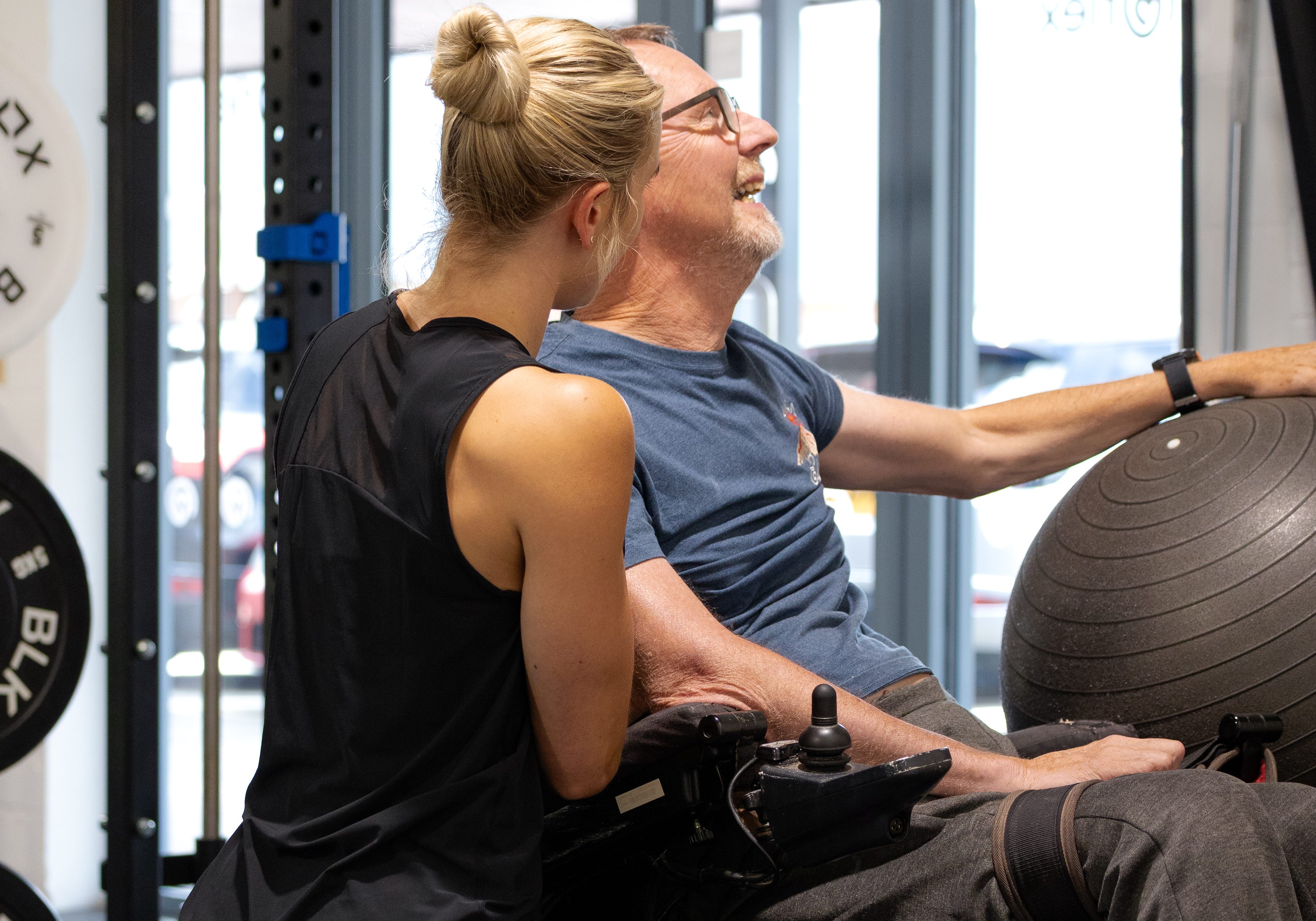
In the later stages of Parkinson’s disease, physiotherapy plays a vital role in maintaining comfort, safety, and quality of life. While mobility may be significantly reduced, meaningful progress can still be made by focusing on supportive and functional goals.
Physiotherapy at this stage often supports:
- Safe mobility, including supported walking or wheelchair use
- Transfers and daily living activities, such as moving in and out of bed or chairs
- Breathing exercises to support respiratory function and voice strength
- Postural management to reduce stiffness and discomfort
- Reducing complications from inactivity, including muscle weakness and joint stiffness
Even in advanced Parkinson’s, physiotherapy can have a positive impact on wellbeing, helping individuals remain as comfortable, confident, and independent as possible. Treatment is delivered with dignity and compassion, often involving carers and family members to ensure continuity of support at home.
Evidence-Based Interventions Used in Parkinson’s Physiotherapy
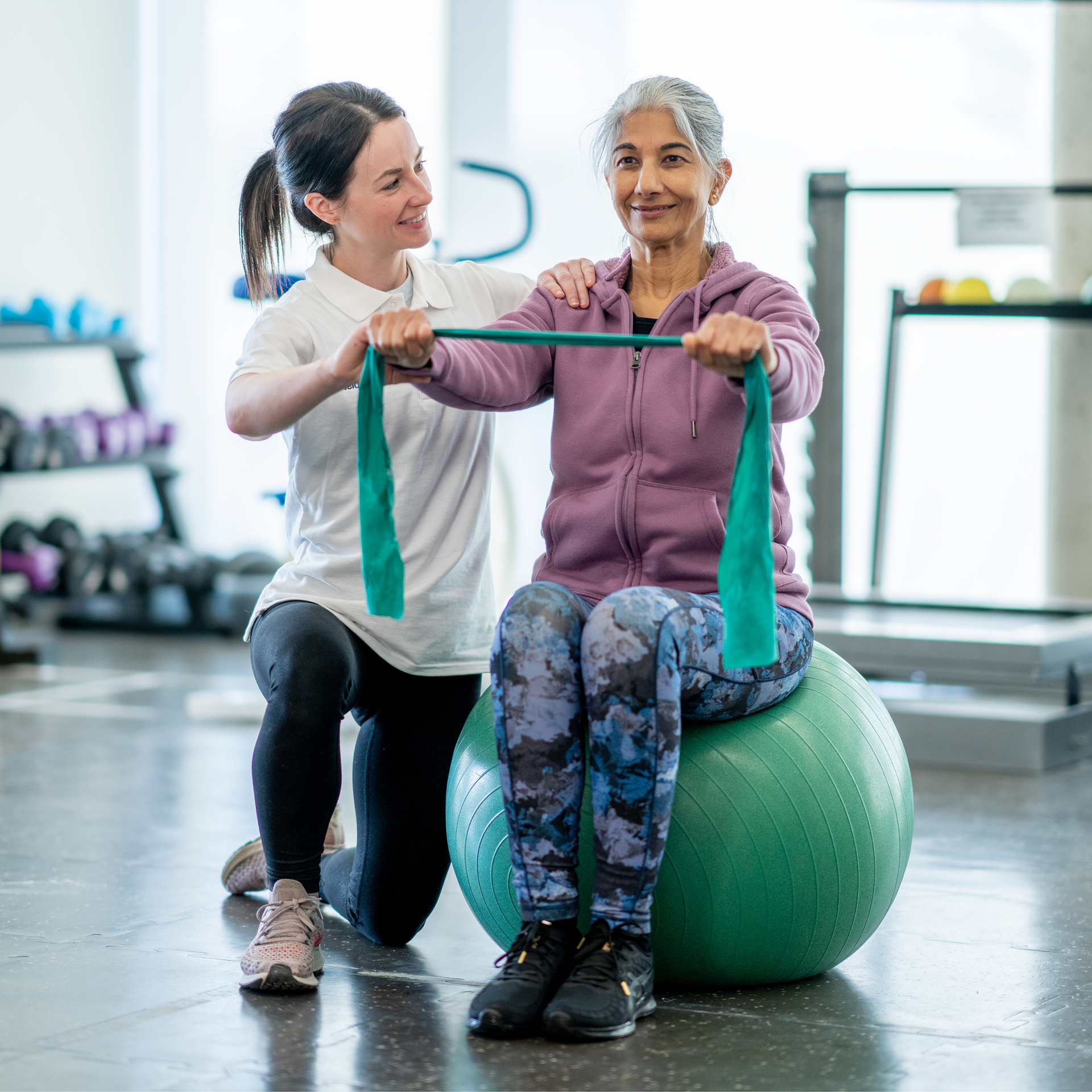
Modern Parkinson’s physiotherapy is underpinned by a strong and growing body of research. Evidence shows that targeted, structured movement can significantly improve mobility, balance, strength, and overall physical function for people living with Parkinson’s disease.
At Flex Health, our neurological physiotherapists draw on a range of evidence-based interventions, carefully selected and adapted to each individual’s symptoms, stage of disease, and personal goals.
Different Physiotherapy Interventions Include:
- Gait Training and Treadmill Training: To improve gait speed, step length, stride length, and overall walking confidence, while addressing common issues such as shuffling and freezing.
- Resistance and Strength Exercises: Designed to maintain muscle strength, support posture, and counteract the progressive muscle weakness often associated with Parkinson’s disease.
- Balance Training: Targeting Parkinson’s balance problems and key fall risk factors through controlled challenges, postural reactions, and dynamic balance work.
- Dual Task Training: Practising movement alongside cognitive tasks (such as walking while talking or carrying objects) to improve real-world mobility and reduce falls.
- Visual Feedback and Cueing Strategies: Using mirrors, floor markers, or visual prompts to enhance movement accuracy, improve posture, and overcome freezing episodes.
- Breathing Exercises: Supporting respiratory function, voice projection, and posture, particularly important as Parkinson’s progresses.
- Upper Limb Rehabilitation: Focusing on arm swing, dexterity, and functional use of the hands for everyday activities.
- LSVT BIG® (large-amplitude movement training): A well-researched programme that uses exaggerated movements to recalibrate movement size and improve motor symptoms.
- Virtual Reality–Assisted Therapy: An emerging area that uses interactive technology to enhance engagement, motivation, and movement quality.
Regular reassessment allows physiotherapists to adapt the exercise programme, adjust intensity, and introduce new movement strategies as symptoms evolve.
High-Intensity and Exaggerated Movement Approaches
In recent years, there has been growing interest in high-intensity, large-amplitude exercise approaches for Parkinson’s disease. One well-known example is the PD Warrior® programme, which is based on exaggerated, purposeful movements performed at higher intensity to help counteract the slowness and reduced movement size commonly seen in Parkinson’s.
Research and clinical experience suggest that these PD Warrior–style methods can be highly effective in improving mobility, confidence, posture, and overall physical function when delivered safely and appropriately. The underlying principles align closely with other evidence-based neurological physiotherapy approaches, such as LSVT BIG®, focusing on recalibrating movement size, increasing effort, and challenging the nervous system in a meaningful way.
At Flex Health, our experienced physiotherapists have training and clinical experience in using these high-intensity, exaggerated movement techniques as part of personalised Parkinson’s rehabilitation programmes. While we do not present ourselves as PD Warrior instructors, we regularly integrate the core principles and exercises from this approach – adapting them to the individual’s symptoms, stage of Parkinson’s, fitness level, and goals.
Living Well With Parkinson’s Disease
Physiotherapy supports far more than physical movement. It plays a vital role in helping people live well with Parkinson’s disease. Ongoing physiotherapy can help individuals:
- Remain independent for as long as possible
- Participate confidently in daily living activities
- Stay socially connected and active
- Maintain self-belief and motivation
- Protect long-term physical health
By embedding exercise and movement strategies into everyday life, physiotherapy empowers people to remain active participants in their own health care.
Why Choose Flex Health?
Flex Health is a leading provider of neurological physiotherapy and rehabilitation in Yorkshire, supporting people with Parkinson’s disease and related movement disorders across all stages of the condition.
Our approach combines clinical expertise, evidence-based practice, and genuine compassion. We offer:
- Specialist Parkinson’s disease physiotherapy
- Experienced neurological physiotherapists
- Personalised treatment plans tailored to individual goals
- Clinic-based and home physiotherapy options
- Ongoing support from diagnosis through advanced stages
- A collaborative healthcare approach
Our physiotherapists work closely with patients, families, and wider health care teams to deliver therapy that is practical, empowering, and meaningful – helping people remain as active and independent as possible.
Looking Ahead
Research into Parkinson’s disease and physiotherapy continues to evolve, with growing interest in areas such as:
- Neural repair and neuroplasticity
- Virtual reality and technology-assisted rehabilitation
- Optimising exercise intensity and frequency
- Long-term exercise adherence and motivation
- Innovative movement and cueing strategies
While further research is ongoing, what remains clear is that physiotherapy is one of the most effective non-pharmacological interventions for Parkinson’s disease, with consistent evidence supporting its role in improving mobility, balance, physical function, and quality of life.
Movement Is Medicine
Parkinson’s disease may be progressive, but loss of independence does not have to be inevitable. With the right physiotherapy intervention, people with Parkinson’s can improve mobility, manage symptoms, and maintain quality of life, at every stage of the condition.
At Flex Health, we are proud to support individuals and families living with Parkinson’s disease, delivering expert neurological physiotherapy and rehabilitation that helps people move with confidence, purpose and hope.
Get in Touch With Us Today
If you or a loved one is living with Parkinson’s, our team is here to help. Book an appointment at one of our clinics, or contact us to discuss a personalised neurological physiotherapy programme today.